
The Synergy of Semax and Selank : A Breakthrough in Peptide Therapy Peptide therapy is becoming an important part of

Peptides have attracted considerable attention in skin research because many function as signalling molecules involved in cellular communication and extracellular matrix regulation. Depending on their sequence and biological activity, individual peptides have been investigated for interactions with collagen-related pathways, fibroblast function, and skin barrier processes, making them valuable tools for exploring the mechanisms underlying skin ageing.
Many peptides have been incorporated into experimental topical formulations to investigate how molecular size, stability, formulation design and delivery strategies influence their interaction with the skin. Research outcomes vary considerably between studies, reflecting differences in peptide chemistry, formulation technology and the experimental models used for evaluation.
These small chains of amino acids act or serve as biological messengers. These messengers play a role in collagen production, regulate inflammation and promote tissue repair. This makes them relevant to dermatological studies on ageing and skin integrity.
This article reviews several peptides that have received significant attention in skin research, examining their biological characteristics, current areas of investigation and the experimental evidence supporting their study.

Peptides are short chains of amino acids, typically comprising between two and fifty residues linked by peptide bonds. Within biological systems, they can function as signalling molecules or structural components, participating in a wide range of cellular processes through highly specific molecular interactions.
Within skin research, individual peptide sequences are investigated for their interactions with fibroblasts, extracellular matrix components, inflammatory pathways and skin barrier biology. Rather than describing peptides as broadly increasing collagen production, current research focuses on how specific molecules may influence the signalling pathways that maintain skin structure and function.
Different peptides are investigated because they participate in distinct biological processes relevant to skin physiology. Although their mechanisms vary considerably, research has focused on several common areas:
Here is a closer look at several peptides that have attracted significant research inte
GHK-Cu (glycyl-L-histidyl-L-lysine copper) is among the most extensively investigated copper-binding peptides in dermatological research. Published studies have explored its involvement in skin remodelling, wound repair and biological processes associated with skin ageing.
For more information, visit the GHK-CuCategory Page.
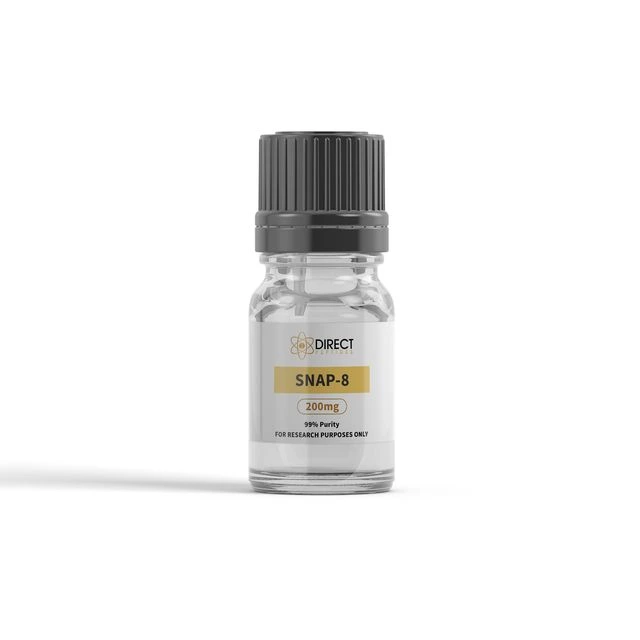
SNAP-8 is a synthetic octapeptide modelled on part of the SNAP-25 protein. It has been investigated for its potential to influence neurotransmitter release in experimental models, prompting interest in its role in research on expression-related facial lines.
For more information, visit the SNAP-8 Category Page.
Tripeptide-29 is a short synthetic peptide investigated in cosmetic and laboratory research for its interactions with fibroblasts and signalling pathways associated with the extracellular matrix.
For more information, visit the Tripeptide-29 Category Page.
Peptides provide researchers with useful tools for investigating the cellular signalling pathways involved in skin ageing, extracellular matrix organisation and normal skin physiology.
These molecules are involved in research on collagen signalling and expression related to wrinkle appearance, while hydration effects mainly depend on accompanying ingredients such as humectants rather than the peptides themselves.
By examining how peptides interact with skin cells, researchers continue to explore non-invasive approaches that may support skin appearance and structural integrity.
Explore Peptide Supplies at Direct Peptides for all your reconstitution requirements.
Interest in skin-related peptides continues to grow because these molecules provide valuable models for investigating how cells communicate during tissue maintenance and repair. Rather than acting through a single biological pathway, different peptide classes interact with distinct molecular processes, allowing researchers to examine extracellular matrix regulation, inflammatory signalling and other mechanisms associated with skin ageing. As experimental knowledge expands, these investigations continue to refine scientific understanding of normal skin biology.
Signal peptides also remain an active area of research in cosmetics and laboratories. Investigators continue to examine how formulation design, delivery strategies, and peptide stability influence biological activity in experimental skin models, while recognising that findings cannot be generalised across peptide families or research settings.
Research into skin-related peptides includes laboratory investigations, cosmetic studies and, for selected compounds, limited clinical evaluation. The amount and quality of evidence differ considerably between individual peptides, making careful interpretation essential when comparing findings across the published literature. Many studies have revealed how certain peptides affect important processes like collagen production and cell repair. For example, clinical trials on GHK-Cu have proven noticeable improvements in skin elasticity and hydration. This supports its role as a strong anti-ageing peptide .
Interest in peptides such as SNAP-8 and Tripeptide-29 reflects their differing biological mechanisms rather than a shared cosmetic effect. SNAP-8 has been widely explored in topical cosmetic research on expression-related facial lines, whereas Tripeptide-29 has attracted attention for its interactions with extracellular matrix signalling. As additional research becomes available, a clearer understanding is emerging of where individual peptides may have scientific relevance—and where further investigation is still needed.
GHK-Cu, SNAP-8 and Tripeptide-29 each represent different areas of peptide research, with investigations focusing on distinct biological pathways rather than a single shared mechanism.
Current research continues to examine their interactions with extracellular matrix biology, cellular signalling and other processes relevant to skin ageing. Although interest in these compounds continues to grow, the strength of evidence varies across peptides, and findings should always be interpreted in the context of the available research.
Research continues to show how peptides might help develop new ways to improve skin health and address ageing.
Note: These peptides are for research purposes only. They are not for human use.
(1) Pickart L, Margolina A. Regenerative and Protective Actions of the GHK-Cu Peptide in the Light of the New Gene Data. Int J Mol Sci. 2018 Jul 7;19(7):1987.
(2) Pickart L, Vasquez-Soltero JM, Margolina A. GHK Peptide as a Natural Modulator of Multiple Cellular Pathways in Skin Regeneration. Biomed Res Int. 2015;2015:648108.
(3) Aruan RR, Hutabarat H, Widodo AA, Firdiyono MTCC, Wirawanty C, Fransiska L. Double-blind, Randomised Trial on the Effectiveness of Acetylhexapeptide-3 Cream and Palmitoyl Pentapeptide-4 Cream for Crow’s Feet. J Clin Aesthet Dermatol. 2023 Feb;16(2):37-43.
(4) He X, Gao X, Guo Y, Xie W. Research Progress on Bioactive Factors against Skin Ageing. Int J Mol Sci. 2024 Mar 28;25(7):3797.
Check out the full range of Topical Peptides from Direct Peptides today!
GHK-Cu and Tripeptide-29 are among the peptides most frequently discussed in research related to skin elasticity. Investigations have explored their involvement in collagen-associated pathways and extracellular matrix biology, although the available evidence differs between the two compounds. Most published work has focused on laboratory or cosmetic research models rather than on demonstrating established clinical outcomes.
GHK-Cu has been included in research examining skin barrier function and hydration-related outcomes, although peptides do not function as humectants in the same way as ingredients such as glycerin or hyaluronic acid. Where hydration has been reported, it is generally interpreted alongside formulation characteristics and broader biological responses rather than as a direct water-binding effect of the peptide itself.
Direct comparisons between topical peptides and botulinum toxin products are not appropriate because they act through different mechanisms and have been evaluated in different research settings. SNAP-8 has been investigated in cosmetic research exploring expression-related facial lines, whereas botulinum toxin has an established clinical role with a distinct mechanism of action and route of administration.
GHK-Cu and Tripeptide-29 have both been investigated in research on age-associated changes in skin biology, although they address different aspects of scientific interest. GHK-Cu has been examined extensively in studies involving tissue remodelling and wound repair, while Tripeptide-29 has primarily been explored for its interactions with extracellular matrix signalling. Their roles continue to be investigated across a range of laboratory and cosmetic research models.
Peptides are highly relevant to research on sun-damaged skin because they may support repair and help manage oxidative stress. GHK-Cu plays an important role due to its antioxidant activity and involvement in tissue regeneration. Research models examine these peptides to study recovery of elasticity, barrier function, hydration, and overall skin resilience after UV exposure.
BPC-157 Peptide Vial
Price range: £11.46 through £43.36 Select options This product has multiple variants. The options may be chosen on the product page
BULK BUY
Sermorelin Peptide Vial
Price range: £17.84 through £95.40 Select options This product has multiple variants. The options may be chosen on the product page
SALE
SNAP-8 (Topical)
Original price was: £97.85.£34.25Current price is: £34.25. Add to cart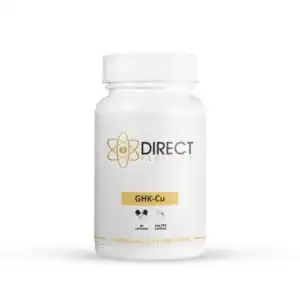
GHK-Cu Capsules
£63.33 Add to cartThe Synergy of Semax and Selank : A Breakthrough in Peptide Therapy Peptide therapy is becoming an important part of
How Do Peptides Work for Wound Healing, Tissue Regeneration And Promote Recovery? Peptides have been investigated for their potential influence
Can Collagen Peptides Cause Acne ? In recent years, collagen peptides have attracted increasing research interest for their potential to
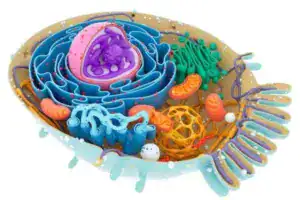
What Are Mitochondrial-Derived Peptides ? Understanding Humanin, MOTS-c and the Mitochondria-Targeting Peptide SS-31 Interest in mitochondrial health has grown rapidly