
Ipamorelin vs GHRP-2 : Which Peptide Shows More Targeted GH Release? Growth hormone research includes peptides that influence how and

Ageing involves a gradual accumulation of biological changes that affect tissues, cellular function and regenerative capacity over time. As our understanding of these processes has advanced, peptides have become an active area of research because many participate in cellular signalling pathways that support tissue maintenance and repair. Interest in these compounds continues to grow, although their biological activity varies considerably among individual peptides, and much of the evidence remains in laboratory and experimental research.
Rather than examining peptides as a single group, researchers investigate individual compounds to elucidate specific biological mechanisms, including extracellular matrix regulation, mitochondrial function, and cellular senescence. This article reviews several well-known research peptides, the mechanisms currently under investigation and the evidence available from published studies.
Peptides are short chains of amino acids that perform a wide variety of biological functions throughout the body. Many act as signalling molecules, allowing cells to communicate and coordinate normal physiological processes. In research on ageing, individual peptides are investigated for their interactions with pathways involved in tissue maintenance, extracellular matrix biology, and cellular regulation, rather than for a single, universal effect.
Some peptides have also been investigated in studies examining skin barrier function, hydration-related outcomes and age-associated changes in tissue structure. Compounds such as MOTS-C, FOXO4-DRI and SNAP-8 are of interest because each targets a different biological mechanism, meaning their roles in ageing research should be considered individually rather than collectively.
Different peptides are investigated for different aspects of ageing biology. Depending on the compound, published research has explored its involvement in collagen-associated signalling, cellular energy metabolism, oxidative stress, inflammatory pathways or tissue remodelling. The evidence varies between peptides, and observations reported in one area of research should not automatically be applied to others.
Buy Peptides Vials from Direct Peptides Today!

Many peptides function as signalling molecules, allowing cells to exchange information that helps regulate normal biological activity. Their mechanisms differ considerably, but some have been investigated for interactions with pathways involved in extracellular matrix organisation , cellular repair and other processes associated with ageing biology.
Collagen provides much of the structural framework that supports skin integrity, while oxidative stress is recognised as a biological factor associated with age-related tissue changes. Certain peptides have been investigated in relation to these pathways, although their reported biological activity varies with the peptide and the experimental system.
Because different peptides interact with distinct molecular pathways, researchers continue to explore their potential relevance to several recognised features of biological ageing. Areas of investigation include cellular signalling, tissue remodelling, mitochondrial function, and mechanisms that maintain normal tissue homeostasis. These remain active fields of research rather than established clinical outcomes.
Ageing arises through the combined influence of genetic, environmental and biological processes that gradually alter cellular function over time. Features commonly associated with ageing include cellular senescence, oxidative stress, mitochondrial dysfunction and changes within the extracellular matrix.
Environmental exposures such as ultraviolet radiation and pollution can accelerate some of these processes, contributing to visible changes in skin structure alongside the intrinsic biological changes that occur with age.
This naturally results in a weakened outer barrier of the body and fine lines, wrinkles and sagging. You are exposed to external factors like pollution and UV rays, as well as internal factors such as bad habits, like eating poorly or getting too little exercise. These issues damage the skin from wear and tear over time.
Various peptides are being investigated because they influence distinct biological pathways. Some are examined for their relationship with extracellular matrix signalling, others for mitochondrial function, inflammatory regulation or cellular senescence. Rather than representing a single anti-ageing mechanism, peptide research seeks to understand how individual molecules interact with specific biological processes that contribute to age-associated tissue changes.
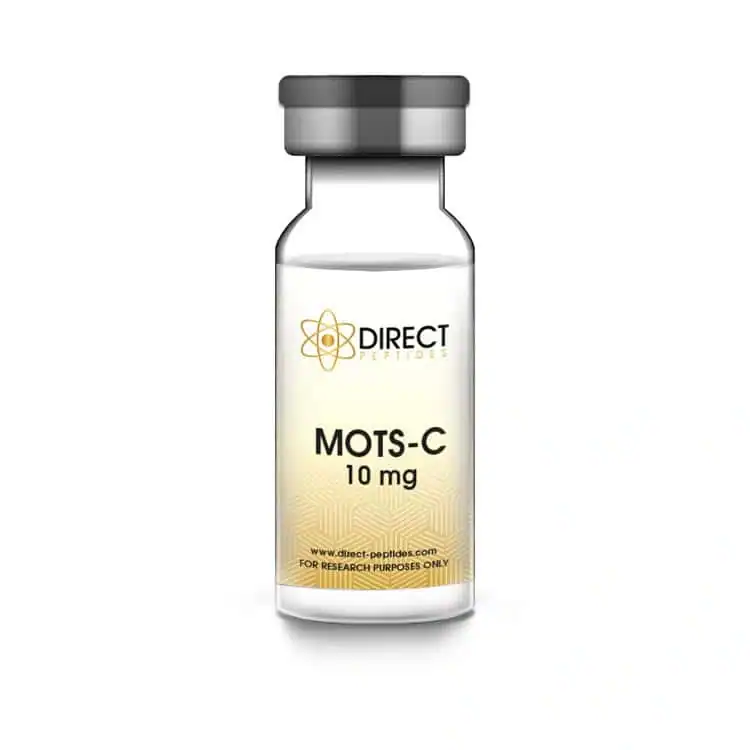
MOTS-C is a mitochondria-derived peptide that has attracted attention for its role in cellular energy metabolism and metabolic regulation. Much of the published research has explored its relationship with mitochondrial function, stress responses and age-associated metabolic changes rather than skin biology specifically. Interest in MOTS-C continues to expand as researchers investigate how mitochondrial signalling influences healthy ageing.
Experimental studies have examined whether MOTS-C influences cellular responses associated with oxidative stress, mitochondrial activity and metabolic adaptation.
Although these biological mechanisms are relevant to ageing research, direct effects on skin texture or elasticity remain far less established and continue to require further investigation.
Current research has linked MOTS-C with pathways involved in mitochondrial signalling, metabolic homeostasis and cellular stress responses. While these findings have generated considerable scientific interest, much of the evidence remains preclinical, and the biological significance of MOTS-C continues to be explored across several areas of anti ageing research .
To explore the potential of MOTS-C in scientific research, visit the MOTS-C category page at Direct Peptides .
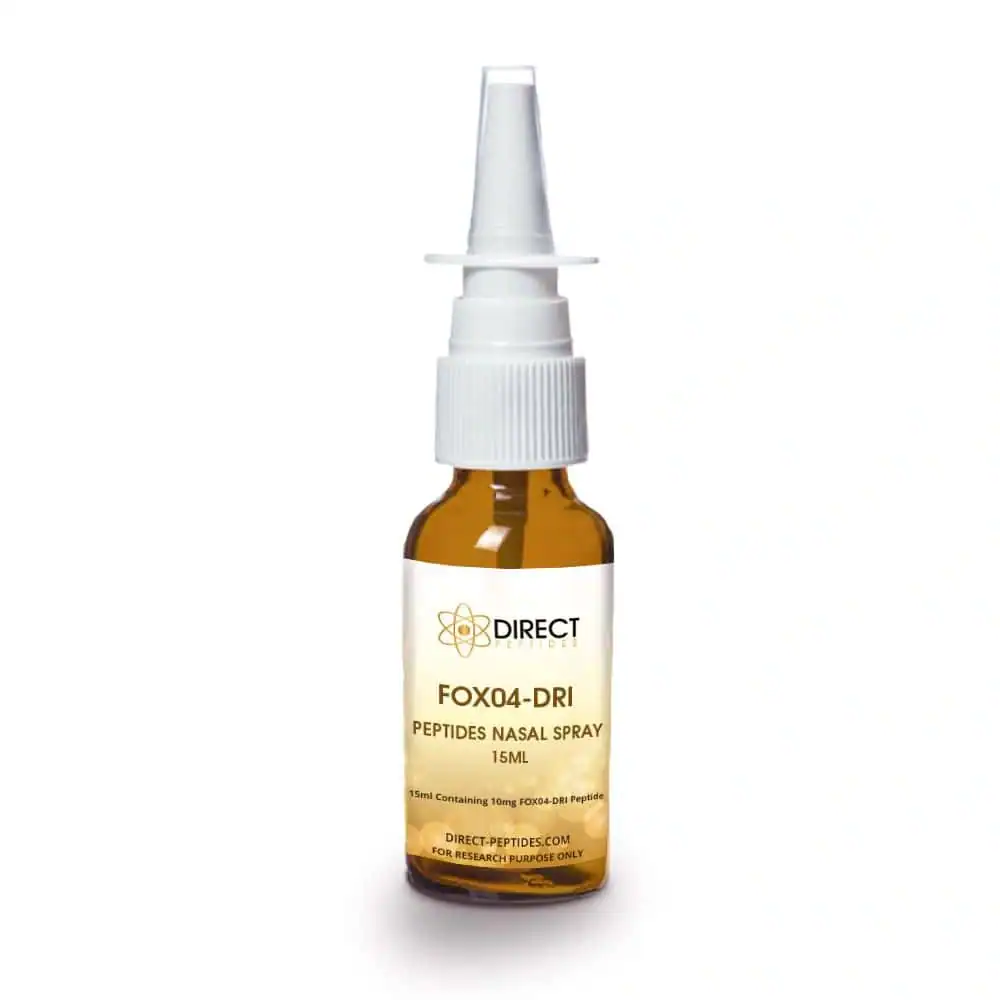
FOXO4-DRI is a synthetic peptide developed for research into cellular senescence. Experimental studies have investigated its ability to disrupt interactions between FOXO4 and p53 within senescent cells, making it a subject of interest in research exploring the biological consequences of cellular ageing. Much of this work remains confined to laboratory and preclinical models.
FOXO4-DRI is primarily investigated for its potential role in the selective elimination of senescent cells within experimental models. Because the accumulation of these cells has been associated with several features of biological ageing, researchers continue to examine whether this mechanism may contribute to healthier tissue function. Any implications for skin appearance remain investigational and should not be interpreted as established outcomes.
Current research focuses on FOXO4-DRI because it disrupts the FOXO4-p53 interaction in senescent cells. Experimental studies have investigated whether disrupting this interaction can selectively eliminate senescent cells while preserving neighbouring healthy cells. This proposed mechanism has made FOXO4-DRI an important research tool for studying cellular senescence and its contribution to biological ageing, although much of the available evidence remains preclinical.
For detailed insights into FOXO4-dri’s role in cellular research, visit the FOXO4-dri category page at Direct Peptides .
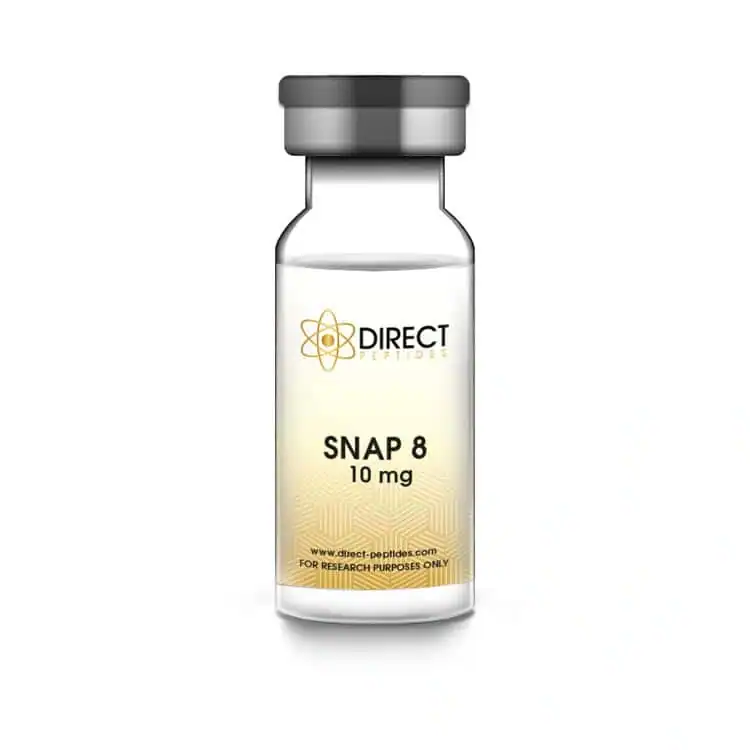
SNAP-8 is a synthetic octapeptide developed for cosmetic research. It has been investigated for its potential influence on neurotransmitter-related signalling and is commonly studied in topical formulations designed to examine the appearance of expression-related facial lines.
Cosmetic research involving SNAP-8 has largely centred on expression-related facial lines rather than structural changes within the skin itself. It is frequently incorporated into multi-ingredient topical formulations, allowing researchers to evaluate its behaviour alongside other cosmetic peptides and active compounds under controlled experimental conditions.
Research with SNAP-8 suggests this amino acid may enhance hydration, decrease wrinkles, and return a youthful-looking appearance. This makes it a useful addition to the anti-ageing arsenal of research tools.
Discover more about SNAP-8 and its research applications by visiting the SNAP-8 category page at Direct Peptides .
Shop Peptide Supplies from Direct Peptides for all your reconstitution requirements.
Changes in skin texture and tone are recognised features of biological ageing and are influenced by multiple structural and environmental factors. Some peptides have been investigated in cosmetic and laboratory research to examine extracellular matrix organisation, barrier biology, and cellular signalling associated with these changes. Because different peptides act through different mechanisms, findings from one compound should not be generalised across the broader peptide category.
Oxidative stress is widely recognised as one of the biological processes associated with ageing. Several peptides have been investigated for their interactions with oxidative stress pathways, antioxidant responses, and mitochondrial biology, although the mechanisms involved differ considerably among compounds. Ongoing research examines how these molecular interactions contribute to broader ageing-related processes.

Maintaining an effective skin barrier is essential for limiting water loss and preserving normal tissue function. Some peptides have been investigated in relation to barrier-associated biological processes, although hydration observed in topical studies is often influenced by the complete formulation rather than the peptide alone. Distinguishing peptide activity from the effects of accompanying ingredients remains an important consideration when interpreting cosmetic research.
Not all peptides investigated in anti ageing research are studied for cosmetic applications. Some are being examined because they influence broader biological processes, including cellular metabolism, mitochondrial function, inflammatory signalling and mechanisms associated with healthy ageing. The direction of this research varies considerably between individual peptides, making it important to evaluate each compound on its own scientific evidence rather than treating peptide research as a single field.
Some peptides are also being investigated outside dermatology, including research into metabolic regulation, neurological signalling and age-associated cellular changes. These areas remain active fields of investigation, and findings reported for one peptide should not be assumed to apply to others without supporting evidence.
Peptide research is expanding and producing new findings. Advances in peptide therapy, such as the development of peptide complexes and delivery systems, have improved outcomes. Research into their mechanisms of action and signalling pathways continues to yield breakthroughs. Studies on different peptides, including MOTS-C, FOX4-dri, and SNAP-8, show their ability to target ageing.
Research into anti ageing peptides continues to expand as scientists investigate how different molecules participate in biological processes associated with ageing. Depending on the peptide involved, current studies may focus on extracellular matrix biology, mitochondrial function, oxidative stress or cellular senescence. Together, these investigations are improving scientific understanding of ageing mechanisms, although the evidence supporting individual peptides remains highly variable.
Although peptides are currently intended for research purposes only. But their ability to target the root causes of ageing shows great promise. This potential is not just for the future of skincare but also for improving overall health. As scientific studies continue to explore their uses, peptides remain a leading focus for innovative and advanced anti-ageing solutions.
The products mentioned in this post are intended for research and medical purposes only to be used by trained professionals.
(1) Garcia JM, Merriam GR, Kargi AY. Growth Hormone in Ageing. [Updated 2019 Oct 7]. In: Feingold KR, Anawalt B, Blackman MR, et al., editors. Endotext Internet. South Dartmouth (MA): MDText.com, Inc.; 2000-.
(2) Kraemer WJ, Dunn-Lewis C, Comstock BA, Thomas GA, Clark JE, Nindl BC. Growth hormone, exercise, and athletic performance: a continued evolution of complexity. Curr Sports Med Rep. 2010 Jul-Aug;9(4):242-52.
(3) Barake M, Arabi A, Nakhoul N, El-Hajj Fuleihan G, El Ghandour S, Klibanski A, Tritos NA. Effects of growth hormone therapy on bone density and fracture risk in age-related osteoporosis in the absence of growth hormone deficiency: a systematic review and meta-analysis. Endocrine. 2018 Jan;59(1):39-49.
(4) Molinari C, Morsanuto V, Ruga S, Notte F, Farghali M, Galla R, Uberti F. The Role of BDNF on Aging-Modulation Markers. Brain Sci. 2020 May 9;10(5):285.
(5) Martínez R, Hernández L, Gil L, Carpio Y, Morales A, Herrera F, Rodríguez-Mallón A, Leal Y, Blanco A, Estrada MP. Growth hormone-releasing peptide-6 enhanced antibody titers against subunit antigens in mice (BALB/c), tilapia (Oreochromis niloticus) and African catfish (Clarias gariepinus). Vaccine. 2017 Oct 9;35(42):5722-5728.
(6) Caicedo D, Díaz O, Devesa P, Devesa J. Growth Hormone (GH) and Cardiovascular System. Int J Mol Sci. 2018 Jan 18;19(1):290.
(7) Sinha DK, Balasubramanian A, Tatem AJ, Rivera-Mirabal J, Yu J, Kovac J, Pastuszak AW, Lipshultz LI. Beyond the androgen receptor: the role of growth hormone secretagogues in the modern management of body composition in hypogonadal males. Transl Androl Urol. 2020 Mar;9(Suppl 2):S149-S159.
Explore Our Topical Peptides – Learn More Here.
There is no single peptide that can be regarded as the most effective for wrinkle-related research. Different compounds are investigated for different biological mechanisms. SNAP-8, for example, has mainly been studied in cosmetic research on expression-related facial lines, whereas other peptides are investigated for their roles in extracellular matrix biology. The available evidence varies considerably between compounds, formulations and study designs.
Some peptides are being investigated in laboratory and preclinical studies examining biological processes associated with brain ageing, including mitochondrial function, cellular signalling and neuroinflammatory pathways. Although this research has generated scientific interest, it remains exploratory, and current findings should not be interpreted as demonstrating established clinical effects.
Peptides for anti-ageing affect collagen production by signalling fibroblast cells to increase collagen and extracellular matrix components. Research shows signal peptides activate pathways involved in tissue repair and structural support. This process helps maintain cellular-level firmness and elasticity in experimental and laboratory models.
The answer depends on the peptide being studied and the question being investigated. Many peptides have demonstrated measurable biological activity in laboratory research, but the quantity and quality of evidence differ substantially between compounds. For that reason, each peptide should be evaluated on its own published research rather than treated as representative of the entire field.
Research examining peptides and wrinkle appearance has generally focused on fine lines, expression-related changes or broader aspects of skin biology rather than deep structural wrinkles. Because deep wrinkles involve complex alterations within multiple layers of the skin, current evidence does not support broad conclusions about the effectiveness of peptides across all wrinkle types. Further research is needed to clarify the contribution of individual peptides in this area.
BPC-157 Peptide Vial
Price range: £11.46 through £43.36 Select options This product has multiple variants. The options may be chosen on the product page
BULK BUY
Sermorelin Peptide Vial
Price range: £17.84 through £95.40 Select options This product has multiple variants. The options may be chosen on the product page
SALE
SNAP-8 (Topical)
Original price was: £97.85.£34.25Current price is: £34.25. Add to cart
BULK BUY
Mots-C Peptide Vial
Price range: £29.79 through £101.29 Select options This product has multiple variants. The options may be chosen on the product pageIpamorelin vs GHRP-2 : Which Peptide Shows More Targeted GH Release? Growth hormone research includes peptides that influence how and

How Orexin A Peptide May Impact Mood, Energy, and Focus? Orexin A Peptide is a neuropeptide that researchers study for

The Synergy of Semax and Selank : A Breakthrough in Peptide Therapy Peptide therapy is becoming an important part of

How Do Peptides Work for Wound Healing, Tissue Regeneration And Promote Recovery? Peptides have been investigated for their potential influence