
How Does Snap-8 Improve Skin Texture ? Snap-8 and skin texture have become a major focus in peptide research. Researchers

Ageing is an inevitable process, and one of the biggest concerns associated with it is loss of skin elasticity. Over time, skin begins to lose its firmness, leading to sagging and wrinkles. Scientists have been researching ways to counteract these effects, and one promising area of study is the use of peptides for ageing skin.
Peptides are short chains of amino acids that are fundamental in the formation of proteins like collagen and elastin. These proteins are crucial for maintaining firm, youthful skin.
Research suggests that peptides may stimulate collagen production, improve skin hydration, and support elasticity. But do they truly work? Let’s explore the science behind peptides and their role in promoting youthful, firm skin.
Peptides have emerged as a potential solution by signalling skin cells to produce more collagen and elastin, which could help restore skin elasticity and slow the ageing process. Scientists are particularly interested in the ability of peptides for ageing skin to enhance skin regeneration and hydration.
Explore Peptide Supplies in at Direct Peptides for all your reconstitution requirements.
Peptides function as cell-signalling molecules, communicating with skin cells to encourage repair and rejuvenation. When introduced into skincare research, peptides may contribute to:
These findings make peptides a promising ingredient in anti-ageing skincare research, particularly for restoring lost elasticity and firmness. Peptides for ageing skin are now at the forefront of dermatological studies aimed at finding effective solutions to maintain healthy, youthful skin.
Given their role in collagen regeneration, peptides are now being closely studied for their ability to enhance skin firmness and elasticity.
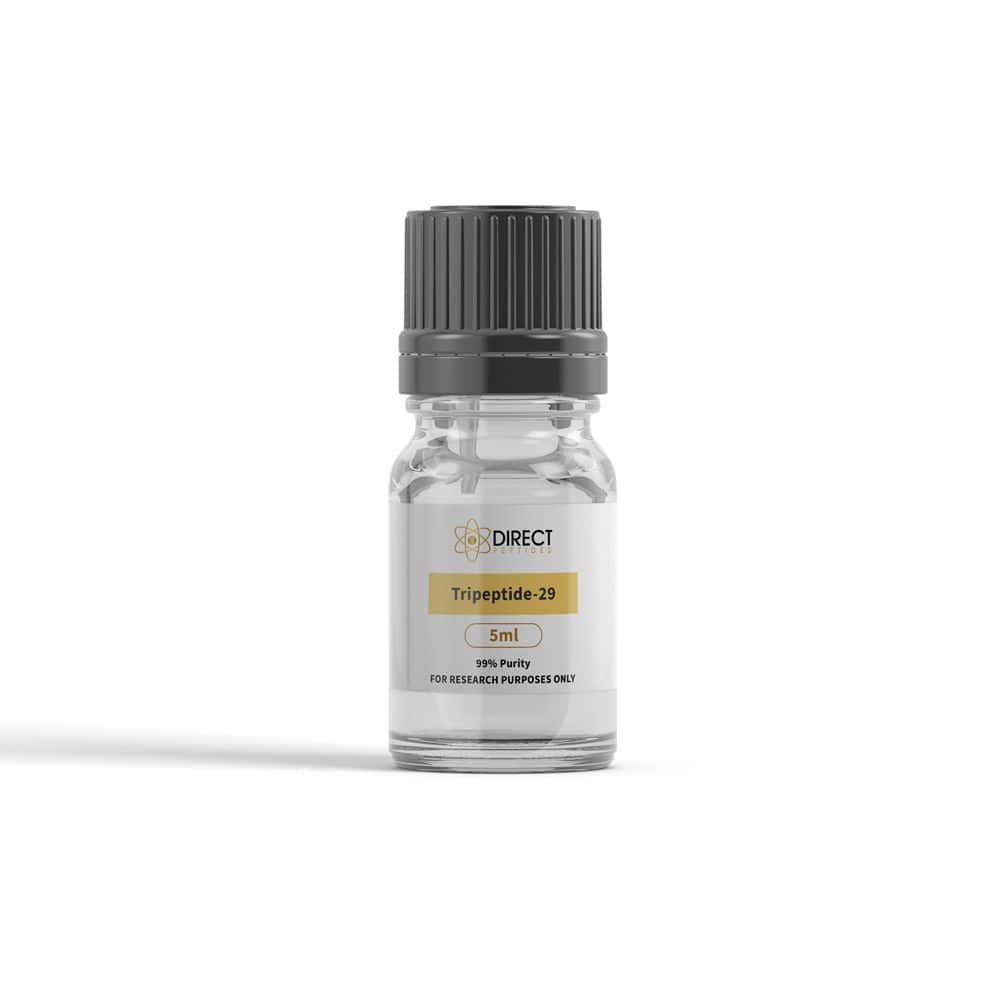
Over time, this may help improve sagging skin and deep wrinkles. Many experts believe peptides for ageing skin containing Tripeptide-29 could play a crucial role in preserving youthful skin structure.
Tripeptide-29 from Direct Peptides boosts collagen production and enhances skin elasticity.
GHK-Cu is a copper-bound peptide that has demonstrated promising effects in wound healing and collagen stimulation. Research suggests it can improve skin firmness and hydration and repair damaged skin cells, making it a valuable addition to anti-ageing studies. The combination of GHK-Cu and other peptides for ageing skin has been found to significantly improve skin elasticity over time.
GHK-Cu from Direct Peptides promotes collagen synthesis and improves skin hydration.
PAL-GHK has been studied for its ability to reinforce the moisture barrier, preventing dehydration and improving skin elasticity. Hydrated skin is less likely to develop wrinkles, making this peptide a key player in anti-ageing research. Peptides for ageing skin in , especially those with PAL-GHK, can help maintain hydrated, resilient skin.
PAL-GHK from Direct Peptides strengthens the moisture barrier and enhances skin elasticity.
Peptides have been found to be well-tolerated in dermatological research, making them a safe addition to anti-ageing skincare studies. Unlike harsh exfoliants or retinoids, peptides work by supporting the skin’s natural functions, reducing the risk of irritation.
Long-term benefits of peptides may include:
With ongoing research, peptides continue to be viewed as a promising component in skincare science. Peptides for ageing skin have shown significant potential in supporting youthful, firm skin over time.
Peptides for ageing skin have gained recognition for their ability to stimulate collagen production, improve elasticity, and enhance hydration. As research advances, peptides are becoming a key focus in dermatology and anti-ageing science.
The peptides discussed in this article are intended for research purposes only and are not for human consumption or use.
(1) Lee YI, Lee SG, Jung I, Suk J, Lee MH, Kim DU, Lee JH. Effect of a Topical Collagen Tripeptide on Antiaging and Inhibition of Glycation of the Skin: A Pilot Study. Int J Mol Sci. 2022 Jan 20;23(3):1101.
(2) Pickart L, Margolina A. Regenerative and Protective Actions of the GHK-Cu Peptide in the Light of the New Gene Data. Int J Mol Sci. 2018 Jul 7;19(7):1987.
(3) Pickart L, Vasquez-Soltero JM, Margolina A. The human tripeptide GHK-Cu in the prevention of oxidative stress and degenerative conditions of ageing: implications for cognitive health. Oxid Med Cell Longev. 2012;2012:324832.
(4) Kachooeian M, Mousivand Z, Sharifikolouei E, Shirangi M, Firoozpour L, Raoufi M, Sharifzadeh M. Matrixyl Patch vs Matrixyl Cream: A Comparative In Vivo Investigation of Matrixyl (MTI) Effect on Wound Healing. ACS Omega. 2022 Jul 11;7(28):24695-24704.
(5) Huang ZJ, Zhou XH, Wen WQ, Huang ZT, Xuan J, Gui P, Peng W, Wang G. Enhanced skin benefits of EGCG loaded in nonapeptide-1-conjugated mesoporous silica nanoparticles to reverse skin photoaging. Int J Pharm. 2024 Nov 15;665:124690.
Discover the full range of Topical Peptides with 99% purity from Direct Peptides , a trusted global supplier of premium research peptides.
How Does Snap-8 Improve Skin Texture ? Snap-8 and skin texture have become a major focus in peptide research. Researchers
The Benefits of Decapeptide-12 : How Can It Help Your Aging Skin? As the years go by, our skin undergoes

Discover The Best Peptides For Energy Researchers have long been interested in peptides and their role in human vitality. These
Can Collagen Peptides Cause Acne ? In recent years, collagen peptides have gained widespread attention for their potential to support