How Pinealon Peptide Influences Gene Expression for Brain Health Pinealon Peptide shows strong potential in research focused on gene expression

A stroke damages brain tissue by cutting off oxygen and nutrients. When blood flow returns, brain cells must stabilize their internal environment, restore communication, and limit oxidative damage. These early cellular responses shape how well cognitive and neurological functions recover, which is why stroke research centers on molecular processes that support neuronal survival.
Pinealon is a small tripeptide made of Glu-Asp-Arg (EDR). Researchers study this peptide in laboratory brain models because it interacts with gene regulation and oxidative balance inside neurons. These actions directly address the mechanisms disrupted by ischemic stroke, including impaired signaling and weakened cellular resilience, providing a molecular foundation for recovery. This connection explains why Pinealon benefits remain relevant in research exploring how the brain adapts during post-stroke recovery.
Explore Pinealon from Direct Peptides , a tripeptide that supports neuronal stability, oxidative balance, and functional recovery in the brain.

Oxidative stress shapes recovery by altering how brain cells manage energy, repair damage, and reconnect after injury. Excess reactive molecules interfere with mitochondrial performance and slow synaptic remodeling, both of which are essential for restoring cognitive and neurological function. When this imbalance persists, neurons struggle to adapt efficiently during the recovery phase.
Research focused on post-stroke oxidative regulation helps explain Pinealon benefits observed in experimental brain models. Studies associate Pinealon with improved redox balance and reduced intracellular stress, supporting neuronal signaling efficiency during recovery-related adaptation. By influencing these oxidative pathways, Pinealon remains relevant in research exploring how the post-stroke brain regains functional stability.
Explore Peptide Supplies at Direct Peptides for all your reconstitution requirements.
Stroke disrupts neuronal signaling by damaging synapses and slowing how brain cells communicate with each other. Ischemic injury lowers neurotransmitter activity, interferes with normal ion movement, and weakens synaptic plasticity. As a result, neurons struggle to transmit signals efficiently, which affects memory, movement, and coordination during the recovery process.
Research models show that a stable cellular environment allows neurons to restore more consistent signaling. Pinealon benefits appear in studies examining oxidative balance and gene activity that support synaptic function. By helping cells maintain internal stability, the peptide supports conditions needed for effective neurotransmission and functional connectivity as the brain continues to adapt after stroke.
After a stroke, brain cells adjust gene expression to survive injury and support repair. These changes guide inflammation control, protein synthesis, and cellular stress responses that influence how damaged tissue stabilizes. Gene activity also affects how neurons and supporting cells coordinate repair signals and adapt to long-term changes in the brain environment.
Experimental research links the EDR tripeptide to the regulation of genes involved in oxidative balance and cellular stability. Through this genetic control, cells maintain internal order while responding to ongoing stress. This mechanism explains how Pinealon benefits connect to research on long-term brain resilience and functional recovery without relying on immediate signaling or short-term adaptation alone.
Beyond Pinealon, researchers also examine other regulatory peptides that support recovery through distinct biological pathways, including:
Semax: Studied for its influence on neuronal signaling, cognitive processes, and neurotrophic pathway activity during post-stroke recovery.
Selank: Examined for its role in stress response modulation, neurochemical balance, and adaptive signaling in experimental brain models.
These peptides target different aspects of brain adaptation, which is why they are often discussed separately in post-stroke research.
Shop Semax from Direct Peptides , a neuropeptide that helps regulate neuronal signaling and neurotrophic pathways for post-stroke brain adaptation.
| Peptide | Mechanisms & Pathways | Research Focus |
|---|---|---|
| Pinealon | Regulates oxidative balance, gene expression, and neuronal stability | Supports neuronal resilience and functional recovery in experimental stroke models |
| Semax | Modulates neuronal signaling and neurotrophic pathways | Maintains synaptic activity and cognitive-related pathways under ischemic conditions |
| Selank | Influences stress response, neurotransmitter balance, and adaptive signaling | Supports neural adaptation and stress regulation during post-stroke recovery |
Semax appears in experimental stroke research because it interacts with molecular pathways that respond to ischemic injury. In animal models of cerebral ischemia, Semax influenced the expression of genes linked to immune signaling, vascular formation, and neurotrophin regulation, which are processes involved in how brain tissue responds after oxygen loss.
Transcriptome analyses also show Semax affects gene clusters related to inflammatory mediators and neurotransmitter systems under ischemic conditions. These changes suggest that Semax engages biological programs related to cellular adaptation following stroke.
Selank is a synthetic peptide analogue of tuftsin that modulates gene expression involved in neurotransmission and stress signaling. Experimental studies show Selank alters the expression of multiple genes in neural tissue, including those linked to GABAergic signaling and dopamine and serotonin receptor activity. These molecular effects connect to pathways involved in stress response and neurochemical balance after brain injury.
Research also shows Selank may modulate components of the GABAergic system and influence the expression of genes involved in inflammatory processes. Together, these actions support neural conditions related to emotional stability, stress modulation, and adaptive signaling in post-stroke brain models, rather than directly driving tissue repair or clinical outcomes.
Checkout Selank from Direct Peptides , a regulatory peptide that supports stress response, neurotransmitter balance, and adaptive neural signaling.
(1) Khavinson V, Linkova N, Kozhevnikova E, Trofimova S. EDR Peptide: Possible Mechanism of Gene Expression and Protein Synthesis Regulation Involved in the Pathogenesis of Alzheimer’s Disease. Molecules. 2020 Dec 31;26(1):159.
(2) Arutjunyan A, Kozina L, Stvolinskiy S, Bulygina Y, et al. Pinealon protects the rat offspring from prenatal hyperhomocysteinemia. Int J Clin Exp Med. 2012;5(2):179-85.
(3) Khavinson V, Ilina A, Kraskovskaya N, Linkova N, et al. Neuroprotective Effects of Tripeptides-Epigenetic Regulators in Mouse Model of Alzheimer’s Disease. Pharmaceuticals (Basel). 2021 May 27;14(6):515.
(4) Sudarkina OY, Filippenkov IB, Stavchansky VV, Denisova AE, et al. Brain Protein Expression Profile Confirms the Protective Effect of the ACTH(4-7)PGP Peptide (Semax) in a Rat Model of Cerebral Ischemia-Reperfusion. Int J Mol Sci. 2021 Jun 8;22(12):6179.
(5) Volkova A, Shadrina M, Kolomin T, Andreeva L, et al. Selank Administration Affects the Expression of Some Genes Involved in GABAergic Neurotransmission. Front Pharmacol. 2016 Feb 18;7:31.
Explore ALL Peptide Stacks from Direct Peptides today, your trusted supplier of premium clinical grade peptides online.

Semax Nasal Spray
Price range: £33.94 through £61.89 Select options This product has multiple variants. The options may be chosen on the product page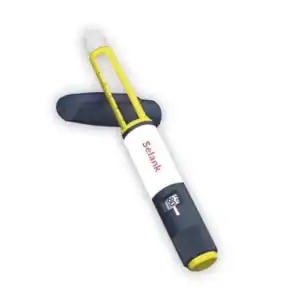
Selank Pre-Mixed Pen 5mg Peptide
Price range: £20.99 through £56.67 Select options This product has multiple variants. The options may be chosen on the product page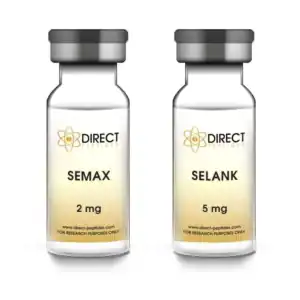
Semax Selank Peptide Stack
Price range: £29.50 through £38.42 Select options This product has multiple variants. The options may be chosen on the product page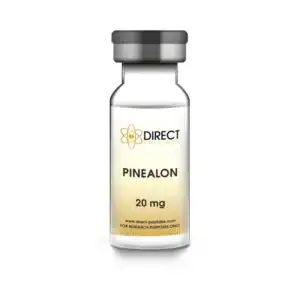
Pinealon Peptide Vial 20mg
Price range: £48.41 through £57.39 Select options This product has multiple variants. The options may be chosen on the product pageHow Pinealon Peptide Influences Gene Expression for Brain Health Pinealon Peptide shows strong potential in research focused on gene expression

Exploring P-21 Peptide Benefits In Wound Healing and Tissue Repair In today’s healthcare world, speeding up and simplifying wound healing

Peptides for Soft Tissue Injury: Discover TB500’s Potential Peptides such as TB500, BPC-157, GHK-Cu, and PTD-DBM are showing great promise

Can Melanotan 2 Increase Libido? Melanotan II (Melanotan 2) is a peptide that mimics the hormone responsible for producing melanin