
How Does Tesofensine for Weight Loss Help Burn Fat? Tesofensine has gained attention in weight loss research for its potential

Researchers studying pigmentation and hormonal pathways need to understand Melanotan 1 vs Melanotan 2. Receptor selectivity creates the main difference. Melanotan 2 delivers nanomolar affinities across several melanocortin receptors, while Melanotan 1 shows higher affinity for MC1R, akin to α-MSH linked to pigmentation. Both synthetic peptides mimic the body’s natural melanin production process, control skin pigmentation, and regulate skin responses to UV exposure and light.
Because of its specific MC1R targeting, researchers find Melanotan 1 useful for studies on tanning, sun damage protection, and sunburn risk. Melanotan 2 interacts with several melanocortin receptors, including MC1R, MC3R, MC4R, and MC5R. It affects the sympathetic nervous system, which influences blood pressure, sexual arousal, and energy balance. Its action on MC5R also impacts sebaceous gland activity and lipid metabolism. Researchers value this in dermatological and metabolic studies.
This guide compares both peptides side by side, examining their structures, receptor roles, potential benefits, common side effects, and support for specific study goals. Researchers select the right analog for their experimental needs by understanding these aspects.
Explore Melanotan 1 from Direct Peptides , a synthetic analog studied for its role in stimulating melanin production and supporting UV protection research.

The table below shows the main characteristics of both peptides and where each fits best in laboratory studies.
| Feature | Melanotan 1 (Afamelanotide) | Melanotan 2 |
|---|---|---|
| Structure | Linear peptide, stable analog of α-MSH | Cyclic peptide, modified for higher potency |
| Primary Receptor Target | MC1R (melanocortin 1 receptor) | MC1R, MC3R, MC4R, MC5R |
| Main Research Focus | Pigmentation, tanning, and UV protection studies | Pigmentation, energy balance, appetite, and sexual stimulation research |
| Observed Potency | Moderate and receptor-specific | Higher potency and multi-receptor activation |
| Common Side Effects (in studies) | Mild redness, fatigue | Nausea, flushing, transient appetite loss |
| Stability in Lab Use | High, longer half-life | Slightly lower, faster breakdown rate |
| Best Suited For Research In | Photobiology, dermatology, pigment response | Endocrine, metabolic, and behavioral pathways |
Both Melanotan 1 and Melanotan 2 are synthetic peptides made of amino acid chains modeled after α-MSH. In research environments, Melanotan nasal sprays are often examined to study melanin production, skin pigmentation, and hormonal effects. Observations may include changes in blood pressure and sexual stimulation, depending on receptor activation. These studies are conducted only for research purposes in approved conditions.
These differences help researchers decide which peptide fits their study goals. The next section explains why their structural and receptor differences exist and what they show about peptide function.
Discover Melanotan 2 from Direct Peptides , a potent research peptide examined for its influence on pigmentation, appetite regulation, and hormonal response pathways.
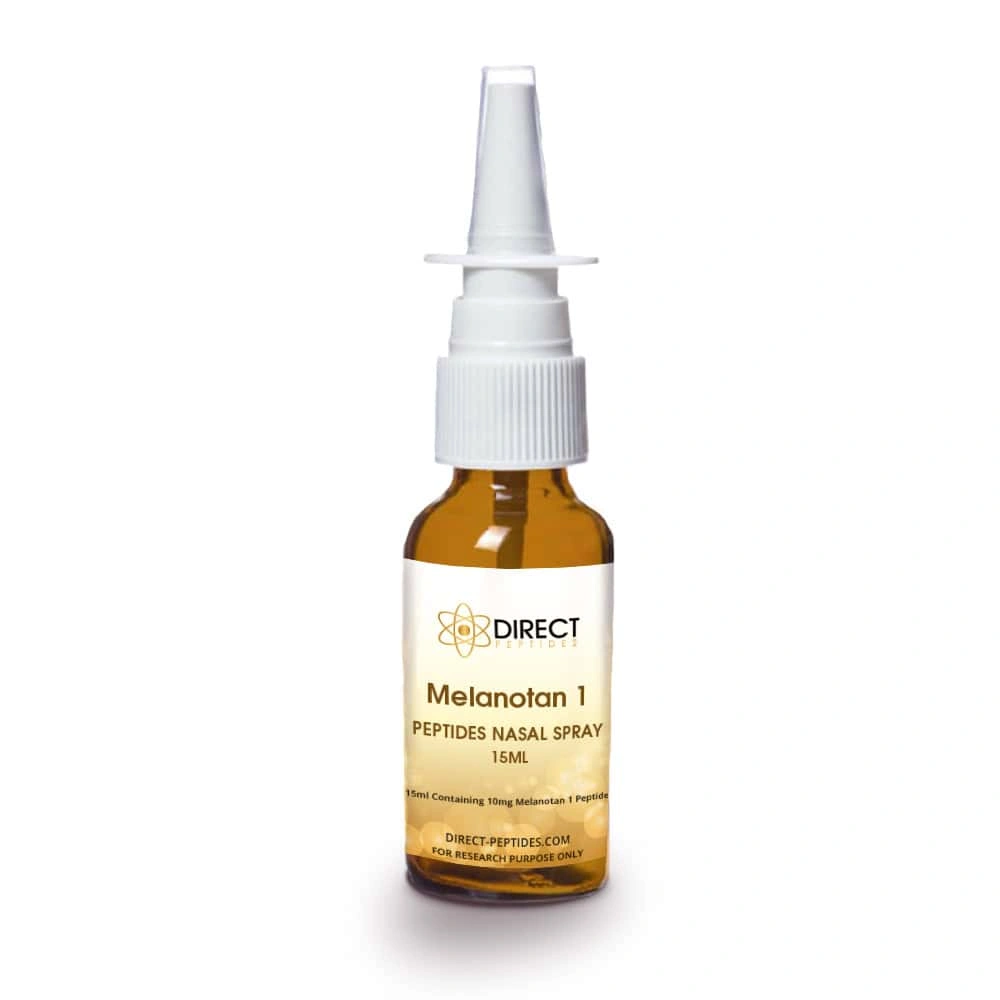
Both Melanotan 1 and Melanotan 2 come from research on a natural hormone called alpha-MSH. This hormone activates receptors that control skin color, metabolism, and cellular signaling. Scientists made these new versions to last longer in the body. They also wanted to see how targeting specific receptors changes the body’s response.
Melanotan 1 came first. It has a straight, linear shape. This shape helps it stay stable and target the MC1R receptor. This specific receptor controls skin pigment and sun protection. Researchers mostly use Melanotan 1 to study skin tanning and how cells react to UV light.
Melanotan 2 came later. It has a cyclic, ring-like shape. This makes it stronger and lets it turn on many different receptors at once, including MC1R, MC3R, MC4R, and MC5R. Because of this shape, Melanotan 2 causes a wider range of effects. Researchers use it to study metabolism, brain signals, and appetite control.
Scientific studies show important benefits linked to Melanotan peptides. Melanotan 1 helps support melanin production by activating the melanocortin-1 receptor on melanocytes, allowing researchers to study natural defense mechanisms against UV exposure and sun damage through increased eumelanin synthesis.
Melanotan 2, with broader receptor activity, shows additional effects in studies of appetite regulation, energy balance and sexual stimulation. Research demonstrates that Melanotan II engages multiple melanocortin receptors and models show appetite suppression and reduced food intake as well as reproductive signaling effects linked to MC4R engagement.
These results show how Melanotan peptides help scientists explore pigmentation, hormonal signaling, and receptor function more deeply by providing experimental insight into how melanocortin receptors operate in different tissues.
With these benefits also come biological reactions, which researchers monitor to understand receptor response, sensitivity, and safe experimental limits.
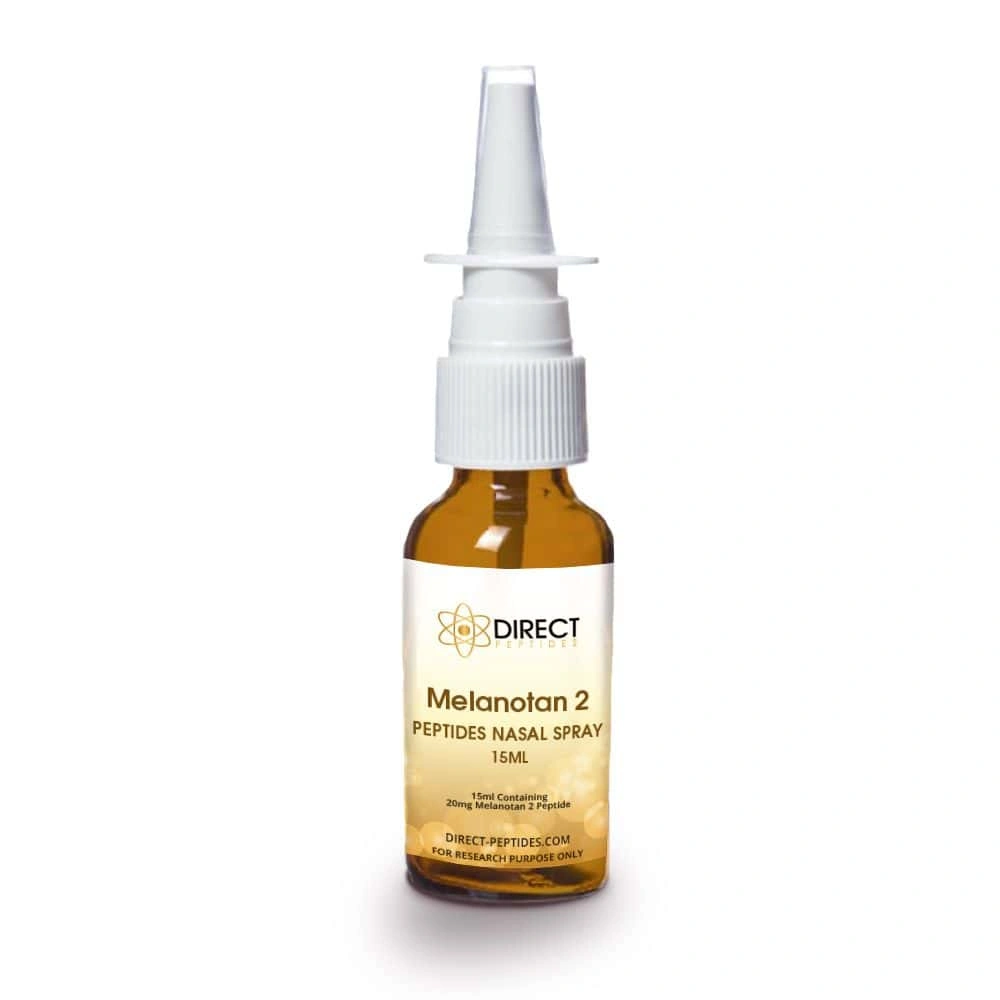
In laboratory and experimental models, researchers observe dose-dependent physiological responses when studying melanocortin receptor agonists, which helps explain how receptor activation influences biological processes.
Melanotan 1 primarily activates MC1R and mainly produces pigmentation-related effects in studies. Research reports mild reactions such as transient nausea or flushing in controlled settings.
Melanotan 2 activates multiple melanocortin receptors and shows a wider range of responses. Studies report nausea, flushing, appetite suppression, and sympathetic effects in some experimental models. These observations help researchers evaluate receptor involvement, dosing parameters, and biological signaling pathways.
Melanotan 2 has no approved medical use and lacks established safety data. Melanotan 1 has approved clinical applications in specific regulated indications, and researchers primarily study both compounds to better understand melanocortin receptor biology.
No single peptide is better for every study. Each has strengths that depend on the research goal. Melanotan 1 offers precise, receptor-specific activity, which makes it ideal for pigmentation and UV-response studies that need consistent and clear results.
Melanotan 2 stands out for its broader receptor activity and ability to produce data across metabolic, neuroendocrine and behavioral pathways. Its multiple receptor targets make it suitable for complex biological modeling and receptor comparison studies.
The best peptide depends on whether the study values specificity or range. Melanotan 1 gives focused, stable pigmentation data, while Melanotan 2 provides wider biological insights. Both add important information to ongoing melanocortin receptor and synthetic peptide research.
At Direct Peptides, we help support this research by supplying high-quality, research-grade peptides tested for purity and consistency. Our catalog includes both Melanotan 1 and Melanotan 2, helping researchers worldwide explore melanocortin biology with accuracy and confidence.
References:
[1] Dorr RT, Ertl G, Levine N, Brooks C, Bangert JL, Powell MB, Humphrey S, Alberts DS. Effects of a superpotent melanotropic peptide in combination with solar UV radiation on tanning of the skin in human volunteers. Arch Dermatol. 2004 Jul;140(7):827-35.
[2] Torres AE, Lyons AB, Hamzavi IH, Lim HW. Role of phototherapy in the era of biologics. J Am Acad Dermatol. 2021 Feb;84(2):479-485.
[3] Wessells H, Fuciarelli K, Hansen J, Hadley ME, Hruby VJ, Dorr R, Levine N. Synthetic melanotropic peptide initiates erections in men with psychogenic erectile dysfunction: double-blind, placebo controlled crossover study. J Urol. 1998 Aug;160(2):389-93.
[4] Bellei B, Papaccio F, Picardo M. Regenerative Medicine-Based Treatment for Vitiligo: An Overview. Biomedicines. 2022 Oct 28;10(11):2744.
[5] Wessells H, Levine N, Hadley ME, Dorr R, Hruby V. Melanocortin receptor agonists, penile erection, and sexual motivation: human studies with Melanotan II. Int J Impot Res. 2000 Oct;12 Suppl 4:S74-9.
Nasal Sprays are available Online from Direct Peptides . Peptide Nasals offer a convenient alternative to researching peptides without the use of injections.
Melanotan 1 is usually preferred for pigmentation-focused research because it selectively activates MC1R and provides predictable, stable results in photobiology and dermatology models.
Melanotan 2 activates additional receptors beyond MC1R, resulting in broader systemic responses, such as nausea, appetite suppression, or flushing seen in research environments.
Researchers needing highly targeted pigmentation data often choose Melanotan 1, while those studying metabolic, behavioral, or neuroendocrine pathways benefit from Melanotan 2’s wider receptor engagement.
No. Both Melanotan 1 and Melanotan 2 are unapproved for human use in the U.S. and many other regions and are supplied strictly for laboratory research purposes.
Melanotan 1’s linear peptide design contributes to a longer half-life and higher stability compared to the cyclic structure of Melanotan 2.
Yes. Due to its activity at MC3R and MC4R, Melanotan 2 is frequently examined in research involving sexual stimulation, appetite regulation, and energy balance.
Nasal sprays allow researchers to study absorption, receptor activation patterns, and peptide effectiveness without injectable delivery, making them useful in specific experimental models.
Direct Peptides provides high-purity, research-grade versions of both peptides along with nasal spray formats, enabling consistent, controlled experimentation across pigmentation, metabolic, and hormonal studies.
TWIN PACKS
Melanotan 2 Nasal Spray
Price range: £25.19 through £81.68 Select options This product has multiple variants. The options may be chosen on the product page
New Reduced Price
New Reduced Price
PT-141 Peptide Vial (Bremelanotide)
Price range: £21.45 through £30.43 Select options This product has multiple variants. The options may be chosen on the product page
PT-141 (Bremelanotide) Nasal Spray
Price range: £29.45 through £53.90 Select options This product has multiple variants. The options may be chosen on the product page
Melanotan 1 Nasal Spray
Price range: £25.19 through £45.38 Select options This product has multiple variants. The options may be chosen on the product pageHow Does Tesofensine for Weight Loss Help Burn Fat? Tesofensine has gained attention in weight loss research for its potential

The Role of the Bronchogen Peptide for Lung Tissue Research Researchers study the bronchogen peptide in laboratory models to examine

How Does the Human C Peptide Benefit the Heart? In recent years, research into the Human C Peptide has revealed

Unleashing the Power of Peptides for Brain Function Dementia is a condition that causes memory loss and cognitive decline. It